
Auto-Folding Lightweight Scooter 24kg
A practical mobility scooter offering folds for transport, best matched to how and where you will use it, held back mainly by the lifting weight some users will find heavy.
The right mobility scooter gives you back your independence: the shops, the park, a visit to friends, all without relying on a lift. This guide explains how to choose one in the UK, what actually matters, and which models we rate now.
For most people the best choice is a scooter that matches where you will actually use it. If you need to lift it into a car or take it on the train, a lightweight or folding travel scooter wins. If you mainly potter around the house, shops and pavements, a stable 4-wheel pavement (Class 2) scooter is comfortable and steady. If you want to cover longer distances and use the road, look at a faster Class 3 (8mph) scooter. Match the scooter to your journeys, your storage and your weight, and the rest follows.
UK mobility scooters fall into two legal classes. Class 2 scooters are limited to 4mph and are designed for pavements and pedestrian areas (they can cross roads but are not for driving along them). Class 3 scooters can do up to 8mph on the road and must be limited to 4mph on the pavement; they need to be registered with the DVLA and have lights, indicators and a horn. You do not need a driving licence or insurance by law for either, though insurance is strongly recommended. See the official rules at [gov.uk/mobility-scooters-rules](https: //www.gov.uk/mobility-scooters-and-powered-wheelchairs-rules).
Out and about locally (shops, GP, café): a stable pavement scooter with a comfortable seat is ideal. Car or train journeys: prioritise a folding or dismantling travel scooter and check the boot and lifting weight. Longer trips and road use: a Class 3 scooter with lights and good range. Heavier users or rougher ground: look for a higher weight capacity, larger tyres and more ground clearance. Be honest about your strength, your hands and your eyesight when choosing the controls.
Many higher-end Class 3 road scooters and heavy-duty all-terrain models are sold through specialist mobility retailers with home demonstrations and engineer servicing, rather than through Amazon. As a result, the scooters we review here skew towards the folding, travel and lightweight tier that is widely available online. For a top-end road scooter, a local mobility dealer that offers a try-before-you-buy demonstration is often the better route - and we say so where it applies.
A practical mobility scooter offering folds for transport, best matched to how and where you will use it, held back mainly by the lifting weight some users will find heavy.

A practical mobility scooter, best matched to how and where you will use it, held back mainly by a few practical limitations.
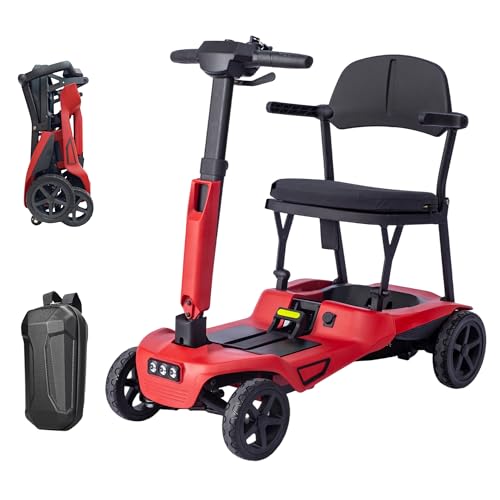
A practical mobility scooter offering range up to 10 miles and folds for transport, best matched to how and where you will use it, held back mainly by the lifting weight some users will find heavy.
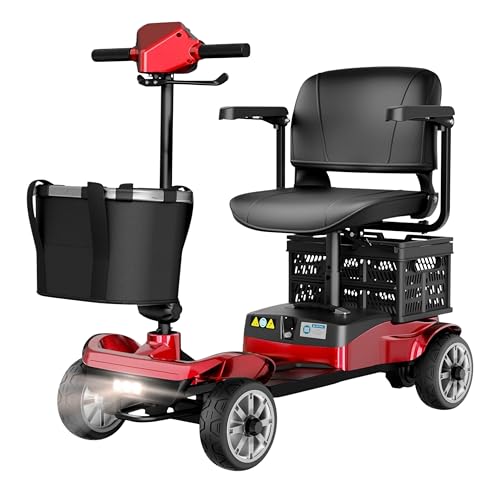
A practical mobility scooter offering range up to 13.75 miles and max user weight 135 kg, best matched to how and where you will use it, held back mainly by a few practical limitations.

A practical mobility scooter offering folds for transport, best matched to how and where you will use it, held back mainly by the lifting weight some users will find heavy.

A practical mobility scooter offering range up to 12.5 miles, best matched to how and where you will use it, held back mainly by a few practical limitations.

A practical mobility scooter, best matched to how and where you will use it, held back mainly by a few practical limitations.
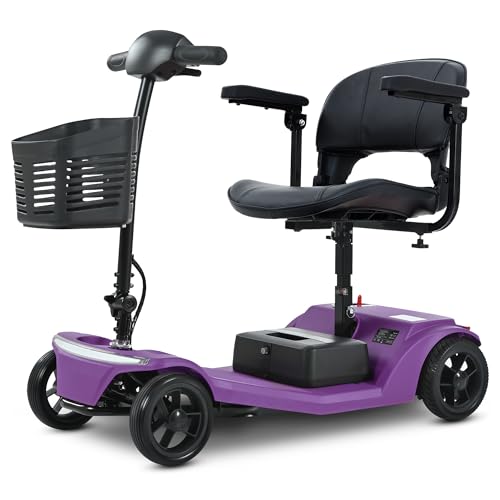
A practical mobility scooter, best matched to how and where you will use it, held back mainly by a few practical limitations.

A practical mobility scooter, best matched to how and where you will use it, held back mainly by a few practical limitations.

A practical mobility scooter offering folds for transport, best matched to how and where you will use it, held back mainly by the lifting weight some users will find heavy.
It depends on your journeys. For local pavement use a stable 4-wheel Class 2 scooter is comfortable; for car or train travel a lightweight folding model is best; for longer road trips a faster Class 3 (8mph) scooter. Match the scooter to where and how you travel rather than the headline specs.
You do not legally need a driving licence to use a mobility scooter, and insurance is not a legal requirement, though it is strongly recommended for theft, damage and third-party cover. Class 3 (8mph) scooters must be registered with the DVLA. Always check the current rules at gov.uk.
Quoted ranges are best-case figures from gentle, flat use. Real-world range is usually lower because your weight, hills, cold weather and tyre pressure all draw more from the battery. Plan a comfortable margin below the headline figure, and remember batteries lose some capacity as they age.
Our top pick is the Auto-Folding Lightweight Scooter 24kg (our score 9.6/10) - A practical mobility scooter offering folds for transport, best matched to how and where you will use it, held back mainly by the lifting weight some users will find heavy..